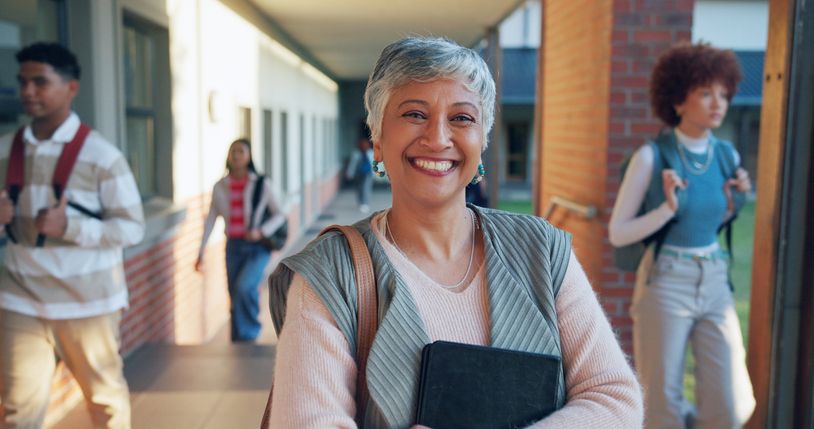
The first step in helping students develop social and emotional skills is creating a classroom where they feel safe.
All students have the legal right to attend a school where they feel safe. The Safe and Drug-Free Schools and Communities Act (SDFSCA), signed into law on January 8, 2002, established four overarching goals: preventing school violence, preventing illegal substance use, involving families and community members, and creating safe, drug-free learning environments that support academic achievement.
The good news is that many younger students already view school as a safe place. They are often excited to come to school, see their teachers, learn, and spend time with friends. However, feelings of safety tend to decline among older students. According to YouthTruth, only 66 percent of students feel safe in their classes.
When students don’t feel safe, it can be difficult for them to focus on learning. So, what can teachers do to create a classroom where students feel secure and supported?
Creating a Safe Space
As teachers, we don’t always know what students are experiencing outside of school. A student may appear happy and well cared for while dealing with family conflict, instability, stress, or other challenges at home. Even when students don’t show signs that something is wrong, those experiences can follow them into the classroom.
That’s why creating a welcoming, predictable, and supportive classroom environment is so important. The following strategies can help make your classroom a safe and supportive place for every student (Linsin, 2011).
Maintain consistency and predictability. Students find comfort in knowing what to expect. Predictable schedules, routines, and procedures can provide a sense of stability, particularly for students who may not experience consistency outside of school.
As much as possible, follow a predictable daily schedule and let students know ahead of time when something will change, such as an assembly or guest speaker. Teach and practice classroom routines so students understand what to do and what’s expected of them. When students know what comes next, they can spend less energy worrying about uncertainty and more energy learning.
Establish an atmosphere of trust. Trust grows when students know they can depend on you. This can be particularly important for older students and students who have experienced trauma or instability. You can help build that trust in several ways:
- Be yourself. Students can tell when you’re not being genuine. You don’t need to pretend to know everything or be good at everything. Let students get to know the real you.
- Be honest. Everyone makes mistakes, including teachers. When you make one, acknowledge it and correct it. Whether you taught something incorrectly or forgot to upload a study guide, admitting the mistake demonstrates honesty and accountability.
- Be reliable. If you make a promise, follow through. If circumstances change, let students know as soon as possible. What may seem like a small change to you can feel significant to a student who depends on consistency.
- Be fair. Apply classroom expectations and procedures consistently. Students notice when expectations are enforced differently from one student to another. Consistency helps students understand what to expect and strengthens their trust in you.
- Create consistent procedures. Effective procedures make the school day more predictable. When students know how to complete common classroom tasks and what is expected from bell to bell, they can navigate the day with greater confidence.
- Remain current and competent. Students are more likely to trust teachers who come to class prepared and demonstrate strong knowledge of what they teach. Continue developing your skills through professional development, current research, teaching resources, and new instructional strategies. Staying current can also help you better support students with a wide range of learning needs and experiences.
Be kind. Kindness may sound simple, but it can make a meaningful difference, particularly for students whose social and emotional skills are still developing. Treat students with patience, respect, and compassion, even on challenging days. By modeling these behaviors yourself, you also show students how to build positive relationships with their peers.
Protect and advocate for your students. Students need to know that their classroom is a place where they will be supported. Younger students may still be learning how to advocate for themselves, while older students may be dealing with social isolation, bullying, or negative experiences at school. Work to create an environment where every student feels welcomed, respected, and protected from physical or emotional harm.
Don’t take misbehavior personally. Students don’t always have the social and emotional skills to communicate frustration, anger, or stress effectively. Their behavior may sometimes come across as defiant or inappropriate, but try not to view it as a personal attack. Acknowledge what the student is feeling, address the behavior appropriately, and work together to determine what support may help.
Maintain a peaceful learning environment. It’s difficult to learn in a classroom filled with tension. This can be especially challenging for students who have experienced trauma or are still developing their social and emotional skills. When students become overwhelmed, they may shut down, disengage, or act out. Your own calm and consistent presence can help set the tone for the classroom and create an environment where students feel ready to learn.
Activities That Inspire SEL Skills
A successful social and emotional learning (SEL) program can support positive social behaviors, stronger relationships with peers and adults, improved academic performance, and better attendance. It may also contribute to fewer behavioral challenges and less risk-taking behavior (Sklad et al., 2012).
Supporting students’ social and emotional needs can have benefits that extend beyond the classroom. Developing social and emotional competence can help prepare students for future academic, career, family, and community experiences (Jones, Greenberg, & Crowley, 2015).
The following activities can help you incorporate SEL practices into your classroom.
Incorporate mindfulness exercises. Mindfulness involves focusing on the present moment and becoming more aware of thoughts, feelings, and surroundings without becoming overwhelmed by them. Because mindfulness can help reduce stress, it can be particularly helpful for students who are still developing their social and emotional skills.
To introduce mindfulness in your classroom, try these activities:
- Use Your Spidey Senses. Invite students to focus closely on one sense at a time. For example, have them close their eyes and listen carefully to the sounds around them. What can they hear? A clock ticking? Voices from another classroom? Someone’s stomach rumbling? Focusing on their senses can help students tune out distractions, become more aware of their surroundings, and return their attention to the present moment.
- Name That Emotion. Once you’ve established a classroom built on trust and mutual respect, invite students to identify the emotion they’re feeling as they enter the room. This simple check-in helps students recognize their own emotions while also building awareness of how their classmates may be feeling. Knowing that a classmate is sad, frustrated, or excited can help students respond to one another with greater empathy.
- Write It Down, Rip It Up, and Throw It Away. This quick emotional check-in takes only a few minutes. Ask students to write down a worry, frustration, insecurity, or negative experience on a piece of paper. Then have them rip up the paper and throw it away. The activity gives students an opportunity to acknowledge what they’re feeling before redirecting their attention to the present.
Practice yoga. Yoga and mindfulness activities can help students develop social and emotional skills while also supporting focus and healthy coping strategies (Butzer, Telles, & Khalsa, 2016; Maynard et al., 2017).
If you’d like to incorporate yoga into your classroom, explore these resources:
- Yoga Poses for Kids
- Managing Big Emotions Through Movement: Yoga for Kids
- Teaching Yoga Practice and Mindfulness to Students
Create an inviting space where students can decompress. Students can become overwhelmed by stress both inside and outside of school, particularly while they are still learning how to regulate their emotions and respond to conflict.
Consider creating a comfortable classroom space where students can take a short break when they feel overwhelmed. Depending on the age of your students, the area might include a comfortable chair, calming books, sensory items, stuffed animals, or a mindfulness jar.
Create a mindfulness jar. A mindfulness jar can provide a simple visual representation of emotions. Just as the contents of the jar swirl when shaken and gradually settle, strong emotions can feel overwhelming at first but become easier to manage when students give themselves time to pause and reset.
Materials:
-
- Clear jar, such as a mason jar or an empty clear water bottle
- Water
- Glitter glue (or glue and dry glitter)
Procedure:
-
- Fill a clear jar almost all the way with water. Next, add a big spoonful of glitter glue (or glue and dry glitter) to the jar. Put the lid back on the jar to make the glitter swirl around inside.
- Say to your students, “Imagine that the glitter that you see is like your thoughts. Now imagine that you are mad, upset, or stressed out. See how your thoughts get all swirled around? It makes it difficult to see them clearly. This is the reason why we make silly/irrational decisions when we are upset—because we are not thinking clearly. Don’t worry. These emotions are perfectly normal, and they happen to everybody, even adults.”
- Now set the jar down in front of students and allow the glitter to settle. Tell your students, “Now watch what happens when you sit still for a few moments and concentrate on the glitter in the jar. Keep watching. See how the glitter settles and the water begins to clear? Remember—the glitter represents your thoughts. Your mind works the same way as the glitter in the jar. When you are calm for a little while and are mindful of your thoughts, your emotions begin to settle, and you start to see things much more clearly. This is called mindfulness and it is a very important skill to have.”
Create a plan for addressing feelings or problems at home or school. Teachers play an important role in supporting students, but some situations require help from a trained professional. If you’re unsure how to support a student who is struggling with feelings or problems at home or school, reach out to your school counselor, social worker, psychologist, or another appropriate support professional. Having a plan in place can help you and your students know where to turn when additional support is needed.
Safe Learning Environment Check-In
How are you helping create a safe and supportive learning environment for your students? Use the questions below to reflect on your classroom practices.
- Do you regularly ask students how they are doing?
- Do you make yourself available to students during appropriate times throughout the school day?
- Do you make time to meet one-on-one with students who have concerns?
- Do you model a positive and welcoming attitude?
- Do you recognize students for their effort and accomplishments?
- Do you feel comfortable stepping in when conflicts arise between students?
- Is there room for appropriate humor and laughter in your classroom?
- Do students generally seem comfortable and engaged in your class?
- Are you genuine and authentic with your students?
- Do you provide opportunities for students to be creative and express what makes them unique?
If you answered yes to seven or more questions, you’re already using many practices that can contribute to a safe and supportive classroom. If you answered yes to six or fewer, consider which areas you could strengthen to help students feel more comfortable, connected, and supported.
Learn More About Social and Emotional Learning
Want to explore social and emotional learning in greater depth?
Visit the Professional Development Institute (PDI) website or explore our Social and Emotional Learning courses for additional strategies and resources.
For over 28 years, PDI has provided affordable, high-quality online professional development for K–12 educators. Our courses focus on practical strategies teachers can apply in their classrooms and are completely online and self-paced.
PDI offers university credit options through American College of Education (ACE) and UC San Diego (UCSD) Division of Extended Studies. You can also explore our full catalog of online courses covering topics relevant to today’s classrooms.
Article References
Butzer, D.B., S. Telles, S.S. Khalsa (2016). “Implementing yoga within the school curriculum: A scientific rationale for improving social-emotional learning and positive student outcomes.” In Journal of Children’s Services, 11(1), pgs. 3-24.
Jones, D.E. M. Greenberg, & M. Crowley (2015b). “Early social-emotional functioning and public health: The relationship between kindergarten social competence and future wellness.” Retrieved 13 Nov. 2017 from http://ajph.aphapublications.org/doi/abs/10.2105/AJPH.2015.302630
Linsin, M. (2012). “Classroom Management and the Power of Your Personality.” Retrieved 15 June 2017 from https://www.smartclassroommanagement.com/2012/04/21/classroom-management-and-the-power-of-your-personality/
Maynard, B.R., M.R. Solis, V.L. Miller, K.E. Brendel (2017). “Mindfulness-based interventions for improving cognition, academic achievement, behavior, and socioemotional functioning of primary and secondary school students.” Retrieved 14 Dec. 2017 from https://campbellcollaboration.org/media/k2/attachments/Campbell_systematic_review_-_Mindfulness_and_school_students.pdf
Sklad, M., R. Diekstra, M. De Ritter, J. Ben, & C. Gravesteijn (2012). “Effectiveness of school-based universal social, emotional, and behavioral programs: Do they enhance students’ development in the area of skill, behavior, and adjustment?” Retrieved 13 Nov. 2017 from http://onlinelibrary.wiley.com/doi/10.1002/pits.21641/abstract